For more than a century, America's railroads played a vital role in moving the nation's mail. Specially equipped railway post office (RPO) cars served as traveling post offices, allowing postal employees to sort and distribute mail while trains carried it across the country.
What Was a Railway Post Office?
Unlike ordinary baggage cars, an RPO was a fully functioning post office on wheels. Inside were sorting tables, racks, pigeonholes for letters, and storage space for mailbags. Postal clerks sorted letters and prepared mail for delivery to communities along the route or transfer to connecting trains.
These clerks worked for the United States Post Office Department, not the railroad. Their jobs required extensive knowledge of towns, postal routes, and railroad schedules. Sorting mail while traveling greatly reduced delivery times.
The first officially established U.S. railway post office route began operating in 1864. RPOs eventually became an essential part of the nation's postal system, connecting small communities with distant cities.
Picking Up Mail Without Stopping
One of the most remarkable features of railway mail service was the ability to exchange mail without stopping the train.
At designated locations, a trackside mail crane held a canvas pouch containing outgoing mail. As the train passed, a postal clerk extended a metal catcher arm from the RPO car, snatching the pouch from the crane. At approximately the same time, another pouch containing mail for that community was tossed from the train for local postal workers to collect.
Known as "mail on the fly," this practice allowed small towns without scheduled passenger stops to receive and dispatch mail. It required precise timing, skill, and familiarity with the route.
The End of an Era
Railway post offices remained important well into the 20th century. At their peak, railway postal clerks handled most of the nation's non-local mail.
Following World War II, improved highways and growing air transportation gradually reduced the need for railway mail service. The last regularly operated RPO route, between New York and Washington, D.C., made its final run on June 30, 1977.
The Heart of Dixie Railroad Museum preserves two examples of this once-essential service: Southern Railway RPO No. 30 and Baltimore & Ohio Railroad RPO No. 76. Although neither car is currently operational, both represent an important chapter in American railroad and postal history.
Southern Railway RPO No. 30
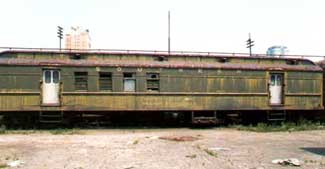 American Car & Foundry built Railway Post Office No. 30 in 1928. The car last served the Southern Railway before becoming part of the Heart of Dixie's collection.
Designed as a full railway post office rather than a combination baggage-and-mail car, No. 30 featured a clerestory roof and friction bearings. When built, it also had a skylight, providing additional natural light for postal employees working inside.
Railroad records document the installation of an eight-gallon Giessel water cooler on September 17, 1956, a small but interesting detail of the car's working history.
No. 30 was donated to the Heart of Dixie Railroad Museum on January 12, 1971.
Fire Damage and Preservation
In 1998, while No. 30 was in storage at the museum's original Birmingham location, a fire associated with an illicit drug transaction severely damaged the car, gutting its interior.
The damage brought an unfortunate interruption to the car's preservation history. No. 30 is currently stored in the museum's Clark Yard while a decision regarding its restoration remains pending.
Baltimore & Ohio Railroad RPO No. 76
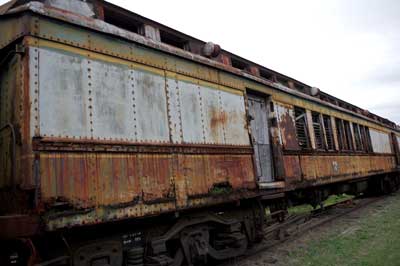 Built in 1912 by the Pullman-Standard Car Manufacturing Company, Railway Post Office No. 76 last served the Baltimore & Ohio Railroad (B&O).
Like Southern Railway No. 30, it was constructed as a full railway post office car. Its original design included a clerestory roof, six-wheel trucks, and friction bearings, features characteristic of heavyweight passenger equipment from the early 20th century.
No. 76 was donated to the Heart of Dixie in July 1967, making it one of the museum's earlier acquisitions.
The Effects of Northeastern Winters
Years of service in the northeastern United States took a considerable toll on No. 76. During harsh winters, railroads commonly used salt to melt ice, exposing equipment to conditions that accelerated corrosion.
As a result, No. 76 has suffered extensive rust and weather-related damage. Its present condition reflects the challenges involved in preserving railroad equipment that spent much of its working life exposed to severe weather.