Built between 1955 and 1956 for the Long Island Rail Road (LIRR), Coach No. 2972 was part of an ambitious modernization program intended to improve commuter service in the New York metropolitan area. One of 55 identical 120-seat coaches, the car represented a significant improvement over the aging equipment that had served generations of Long Island commuters.
After nearly half a century of commuter service, No. 2972 found a new home at the Heart of Dixie Railroad Museum in 2005. Today, it remains an important part of the museum's operating passenger fleet.
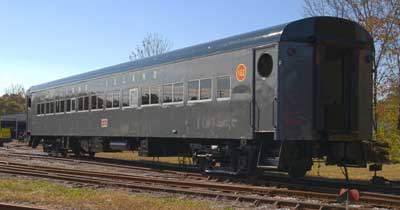
Built for Commuter Service
No. 2972 was one of 55 identical commuter coaches ordered by the Long Island Rail Road between 1955 and 1956. Built using Pullman-Standard's girder construction, the cars featured smooth, painted steel sides and rode on 41-BNP (CIB) trucks equipped with Hyatt 5½-by-10-inch roller bearings.
The coaches were equipped with remotely controlled sliding doors to accommodate the frequent station stops characteristic of commuter operations. Manual sliding doors were also provided at each end of the passenger compartment.
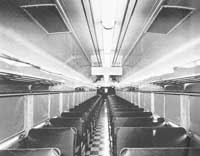 Inside, the cars seated 120 passengers in a combination of two- and three-person walkover seats. These seats could be reversed to face the direction of travel, an important convenience for trains operating in both directions over the same routes.
Other interior features included checkered linoleum floor tiles, a continuous strip of fluorescent lighting along the center of the ceiling, and luggage racks interspersed with advertising cardholders.
Of the original 55 coaches, at least two have been preserved in museum operation. In addition to No. 2972 at the Heart of Dixie Railroad Museum, the Hoosier Valley Railroad Museum in North Judson, Indiana, operates sister car No. 2937.
Passenger Railroading After World War II
Following World War II, American passenger railroads faced increasing competition from automobiles and improved commercial air service. Across much of the country, passenger traffic declined as travelers embraced the flexibility of highway travel and the speed of the airplane.
The Long Island Rail Road faced a somewhat different situation. Serving the densely populated New York metropolitan area, the railroad remained an essential means of transportation for thousands of daily commuters. Rail travel was firmly established as part of the region's commuting culture, even as passenger service elsewhere declined.
Nevertheless, the railroad struggled with rising operating costs, aging equipment, and financial constraints that made modernization increasingly difficult.
The Toonerville Trolley Reputation
By the 1950s, much of the Long Island's passenger equipment dated from the early 1900s. Operating costs had doubled since 1917, yet existing regulations had prevented the railroad from raising fares sufficiently to meet those expenses.
Without adequate revenue for new equipment, previous owners had deferred modernization. The resulting fleet was increasingly unreliable, with frequent mechanical failures and passenger accommodations that reflected standards established decades earlier.
Even the dimensions of the older coaches had become a problem. Seats and interior spaces were designed when the average passenger was smaller, making travel increasingly cramped and uncomfortable for commuters.
The railroad's aging equipment and unreliable service earned it an unflattering nickname: the "Toonerville Trolley," a reference to the fictional, comically antiquated streetcar made famous in the newspaper comic strip.
Steps Toward Modernization
 Despite continuing financial difficulties, Long Island management recognized that modernization was essential to the railroad's future.
The resulting program called for replacing the remaining steam locomotives with diesel power, purchasing 222 new passenger cars, and refurbishing existing equipment that could remain in service.
To emphasize its commitment to improving commuter service, the railroad introduced a distinctive visual identification system known as the Modernization Number program.
Introduced in December 1954, the program assigned a numbered circular emblem to each new or refurbished passenger car.
New equipment received a red circle with yellow numbers and borders. The number indicated the order in which the car had been delivered under the modernization program. For example, Coach No. 2927 was the 182nd car received and carried Modernization Number 182.
Refurbished equipment received a similar emblem, but with the colors reversed: a yellow circle with red numbers and borders.
The program provided passengers with a visible indication that the railroad was investing in newer, more comfortable, and more reliable equipment.
The Metropolitan Transportation Authority Era
 In 1967, ownership of the Long Island Rail Road passed to a New York State agency, the Metropolitan Transportation Authority (MTA).
Under MTA ownership, No. 2972 received a new exterior appearance, replacing its earlier paint scheme with platinum mist accented by blue stripes and lettering.
The change reflected a new era for the railroad as its commuter operations became part of the region's publicly supported transportation system.
Improved Seating and Passenger Accommodations
As originally built, No. 2972 featured reversible walkover seats arranged for two or three passengers. The seatbacks could be moved to face either direction, allowing commuters to face forward regardless of which way the train was traveling.
During the early 1980s, the original seats were replaced with more modern accommodations. Although the new seats provided considerably greater comfort, they could no longer be reversed. Passengers therefore faced whichever direction their seats happened to point when the car was placed in the train.
The rebuilding also introduced several other improvements. Safety escape windows were installed, and the blue exterior stripe was lowered.
At the same time, the green-tinted windows installed during the 1960s were replaced with more conventional tinted glass. The original green windows had given passengers the rather unpleasant sensation of looking through murky water.
These changes helped extend the useful life of No. 2972 and its sister cars while improving the daily experience of Long Island commuters.
A New Home in Alabama
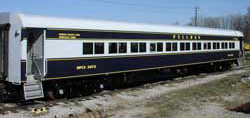 The Heart of Dixie Railroad Museum acquired No. 2972 from a private individual in 2005. The previous owner had purchased the coach directly from the MTA when it was retired from commuter service.
During its period of private ownership, the car's seating arrangement was modified to better accommodate excursion passengers. Some seats were turned to face one another, while others were removed to provide additional legroom.
Although these changes differed from the car's original high-capacity commuter configuration, they proved particularly well suited to the museum's excursion operations. The more spacious arrangement made No. 2972 a comfortable choice for families and other passengers enjoying a leisurely train ride.
Restoration at the Heart of Dixie
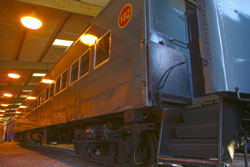 In 2012, No. 2972 entered the Calera & Shelby Railroad's shop for a program of improvements intended to preserve the car and enhance its passenger accommodations.
The initial work included rebuilding the floor and reupholstering the seats.
Additional repairs followed in 2013, including work on the vestibules and boarding steps and the installation of new windows.
The exterior was then repainted to reproduce the original Long Island Rail Road color scheme worn by No. 2972 and its sister cars when they entered service in the mid-1950s.
A Workhorse of the Museum Fleet
Since arriving at the Heart of Dixie Railroad Museum, No. 2972 has proven to be one of the most versatile and dependable cars in the museum's operating passenger fleet.
Except when temporarily withdrawn for maintenance or improvements, the coach has operated on virtually every type of excursion offered by the museum.
Its comfortable seating, spacious interior, and practical commuter-car design have made it particularly well suited to the Calera & Shelby Railroad's passenger operations.
From carrying daily commuters in the New York metropolitan area to welcoming visitors aboard historic excursions in Alabama, No. 2972 continues to fulfill the purpose for which it was built: carrying passengers safely and comfortably by rail.
With continued care and maintenance, this veteran Long Island commuter coach should remain an important part of the museum's operating collection for many years to come.