Before carrying passengers on the Calera & Shelby Railroad, open-air cars Nos. 1121 and 1122 had a very different purpose. Both began their careers as flatcars for the U.S. Army, transporting military equipment long before they were converted to provide visitors with an open-air railroad experience.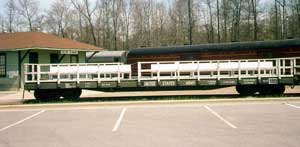
Originally numbered 35211 and 35300, the two cars date to World War II. No. 35211 was built in November 1940, while No. 35300 followed in 1942.
From Military Flatcars to Tour Cars
 During their years at the Anniston Army Depot in Anniston, Alabama, the flatcars were modified to carry passengers on tours of the military installation. Seating and protective railings were added, allowing visitors to see the depot from a moving train.
The arrangement also offered an unusual security advantage. With passengers riding together aboard the open cars, it was considerably more difficult for anyone to wander away from a tour and enter a restricted area. As the original account rather humorously observes, doing so would have required jumping off the train.
A New Home at the Heart of Dixie
The Anniston Army Depot eventually donated both cars to the Heart of Dixie Railroad Museum, where they began another chapter in their long service lives.
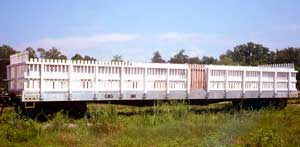
The museum initially painted the cars white and renumbered them Calera & Shelby Nos. 301 and 302. Recognizing the need for additional passenger protection, volunteers installed picket fencing along the sides of both cars to help prevent accidental falls.
Rebuilt for Passenger Comfort
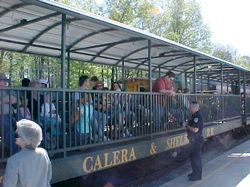 As the museum's excursion operations developed, both cars underwent further improvements. The original seating was replaced with more comfortable accommodations, and the picket fencing gave way to sturdier welded iron railings.
Roofs were also installed to provide passengers with protection from the sun and weather while preserving the open-air character of the cars.
Following these improvements, the cars were renumbered Nos. 1121 and 1122, the numbers they carry today.
From military flatcars to depot tour cars and finally to open-air passenger equipment, Nos. 1121 and 1122 have undergone a remarkable transformation. Today, they offer visitors a different way to experience a train ride, with fresh air, unobstructed views, and a connection to the cars' unusual history.