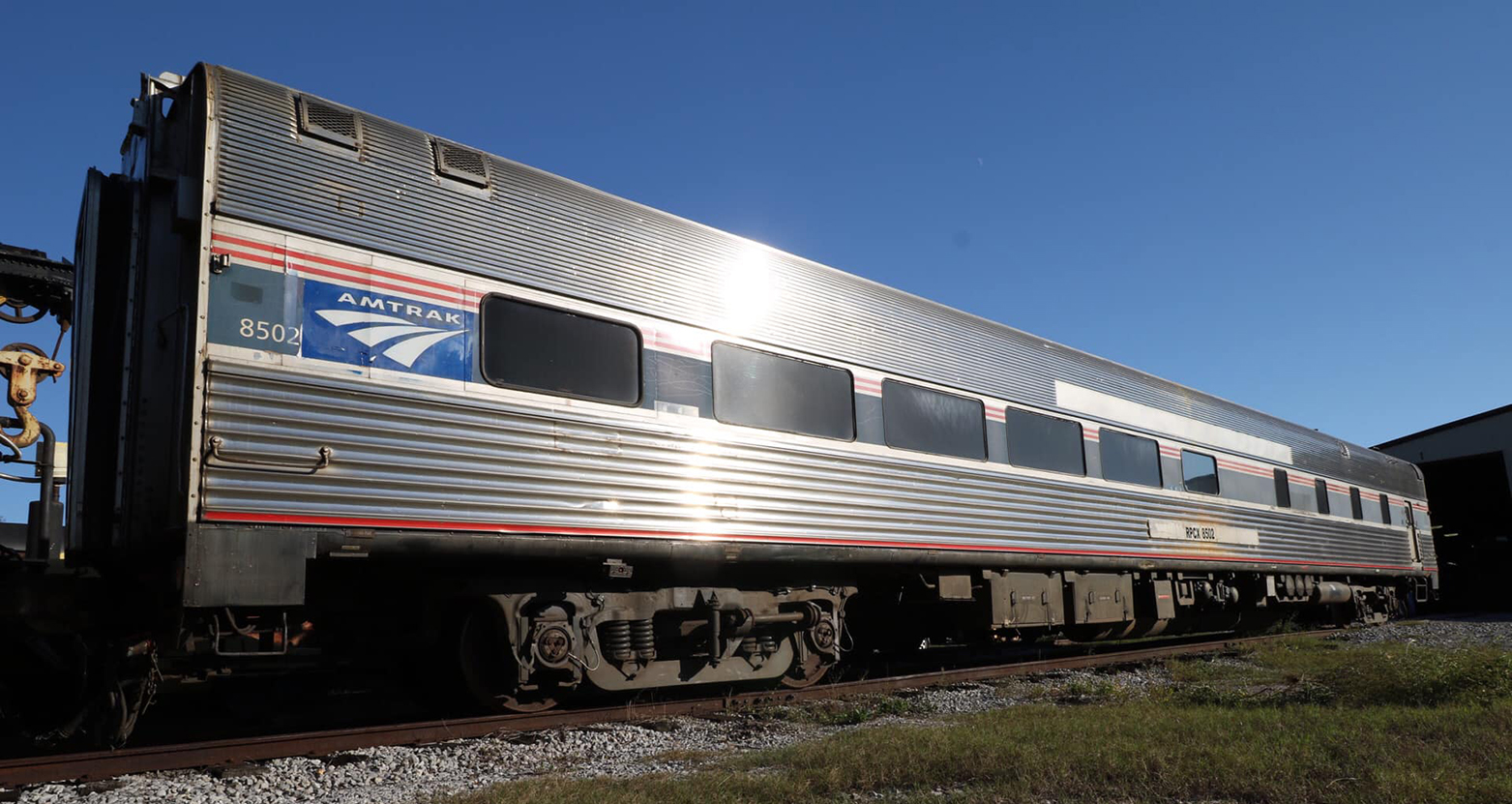
For more than six decades, the Silver Cuisine served passengers aboard some of America's most celebrated passenger trains. Built in 1952 for the Chicago, Burlington & Quincy Railroad (CB&Q), the stainless-steel dining car began its career in the railroad's fleet of Zephyr trains and later served Amtrak until its retirement in 2017.
Today, the Silver Cuisine is part of the Heart of Dixie Railroad Museum's collection, representing an era when dining aboard a passenger train was an important part of the journey.
Built for Zephyr Service
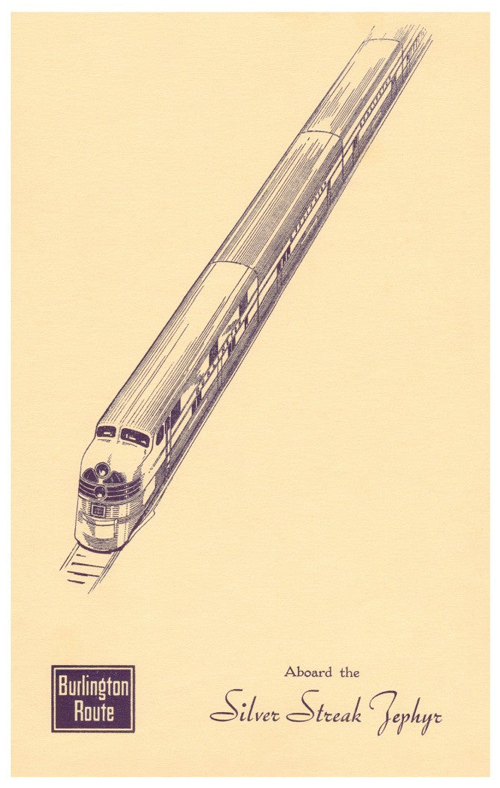
In March 1951, the Burlington ordered three dining cars from the Budd Company under job No. 9624-112. Delivered in October and November 1952, the cars were named Silver Cuisine, No. 198; Silver Inn, No. 199; and Silver Manor, No. 200.
The three cars were intended for the Kansas City Zephyr and a pool of equipment serving the Aksarben Zephyr and California Zephyr. Although the Silver Cuisine was essentially a spare dining car for the California Zephyr, it regularly rotated between that train and the Aksarben Zephyr.
Dining Aboard the Silver Cuisine
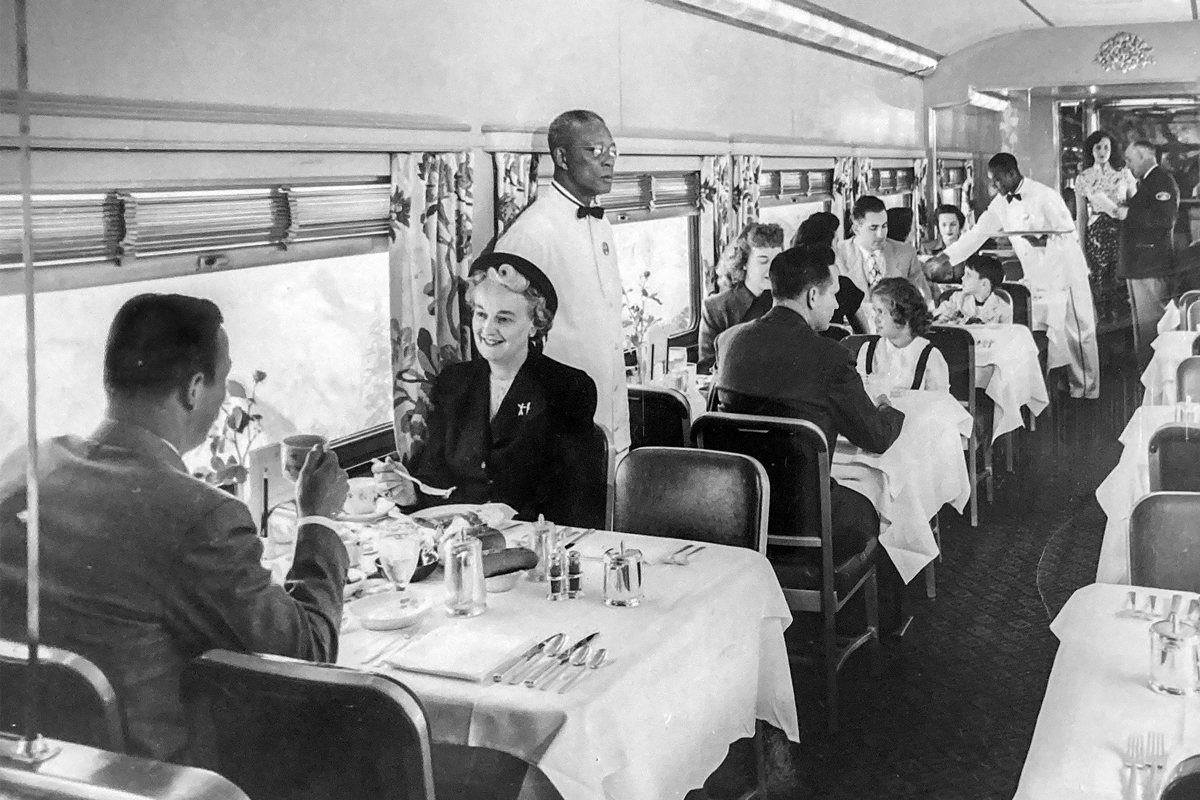 The car's interior was divided into three dining sections, providing seating for 48 passengers. The main dining room seated 32 passengers at tables for four, while smaller sections at either end accommodated eight passengers each.
Passengers could dine in the open central section or in semi-private nooks separated by etched-glass partitions decorated with a vine pattern. The arrangement offered a degree of privacy while retaining the spacious character of the dining room.
The steward's station featured an unusual horseshoe-shaped arrangement. Behind the buffet, additional etched-glass panels depicted ducks found along the Mississippi and Missouri rivers.
The interior color scheme combined rose-red leather upholstery with pale green carpeting. Green Venetian blinds complemented draperies incorporating green, red, and cream. Together, these furnishings gave the dining car an appearance suited to the Burlington's premier passenger trains.
A Kitchen Designed for Fine Dining
The original kitchen included separate refrigerators for dairy products, meats, fresh fruit and vegetables. The stoves burned propane gas. One unusual feature was an “air curtain” between the pantry and dining area, designed to keep heat and cooking odors from entering the passenger space.
Dining on the California Zephyr
The Silver Cuisine was equipped to prepare and serve a wide variety of meals while traveling at railroad speeds. Its kitchen originally included separate refrigerators for dairy products, meat, fresh fruit, and vegetables. Cooking was performed on propane-gas stoves.
One particularly unusual feature was an air curtain separating the pantry from the dining area. This arrangement helped prevent heat and cooking odors from reaching passengers in the dining room.
Dining on the California Zephyr
 Dining-car service aboard the California Zephyr required an extraordinary amount of planning and provisions. At the beginning of a run, a dining car could be stocked with 30 varieties of meat totaling approximately 630 pounds, along with 60 types of fruits, vegetables, and dairy products.
Additional provisions included 130 individual grocery items, among them canned goods and bakery supplies, as well as 30 cases of liquor.
Menus also reflected the regions through which the train traveled. Dining cars departing from the West might feature salmon, while those originating in the East could offer walleyed pike.
This variety was part of the Burlington's effort to make dining aboard the California Zephyr a memorable experience rather than simply a necessity of travel.
The Dining-Car Crew
When new, the Silver Cuisine operated with a staff of 11: four cooks, six waiters, and one steward. During the off-season, when passenger traffic was lighter, the crew was reduced to three cooks, four waiters, and one steward.
These employees were responsible for preparing and serving meals while maintaining the standards of service expected aboard the Burlington's premier passenger trains.
New Numbers and New Ownership
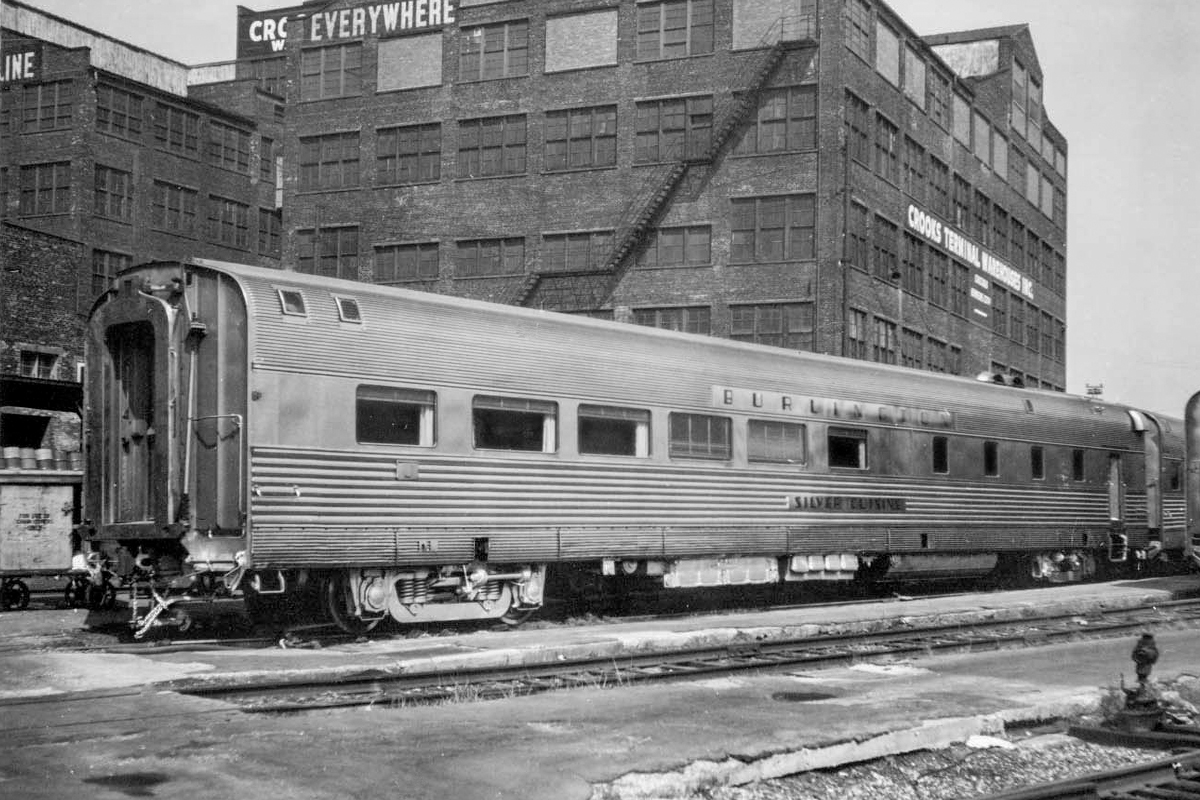
During its long career, the Silver Cuisine carried three different road numbers.
Originally numbered 198 by the CB&Q, the car became Amtrak No. 8053 in 1971 as the newly established national passenger railroad began systematically renumbering equipment acquired from its predecessor railroads.
The car retained No. 8053 until 1979, when it was converted to head-end power (HEP). As part of that conversion, it was renumbered 8502.
During its early years as No. 8502, the car displayed both its new number and the historic Silver Cuisine name. In later years, the name was removed, leaving only the road number.
The Amtrak Years
After Amtrak acquired the car in 1971, the Silver Cuisine initially remained in the same general region where it had served the Burlington. It was assigned to the Denver Zephyr section of Amtrak trains Nos. 5 and 6, operating between Chicago and Denver.
Between 1973 and 1975, and during part of 1976, the car operated on the San Francisco Zephyr section of trains Nos. 5 and 6 between Chicago and Oakland, California.
For a brief period in 1976, the car was also assigned to the Reno Fun Train, which operated every other weekend between Oakland and Reno, Nevada.
During its years on Amtrak's western trains, the Silver Cuisine was maintained at Burlington Northern's 14th Street Coach Yard in Chicago.
In the late 1970s and early 1980s, Amtrak began receiving new Superliner equipment for its western routes. As the new cars entered service, rebuilt heritage dining cars such as the Silver Cuisine were increasingly assigned to eastern and other conventional passenger trains.
During this period, the car operated on trains including the Silver Meteor, Silver Star, Crescent, Lake Shore Limited, Capitol, and City of New Orleans.
Retirement After 65 Years
Beginning in 2015, Amtrak started accepting deliveries of its long-delayed Viewliner II dining cars. The arrival of the new equipment allowed the railroad to begin retiring the remaining cars in its heritage dining fleet.
The Silver Cuisine continued operating until 2017, when it was finally retired after approximately 65 years of passenger service and placed in storage in Chicago.
Acquired by the Heart of Dixie Railroad Museum
On November 28, 2018, Amtrak announced that 99 passenger and baggage cars would be made available for sale or donation. The equipment included baggage cars, refrigerated express cars, crew dormitory cars, and a particularly noteworthy group of 19 heritage dining cars.
During the first week of December 2018, Amtrak made the equipment available for inspection at its Beech Grove Heavy Maintenance Facility near Indianapolis, Indiana.
Representatives of the Heart of Dixie Railroad Museum traveled to Beech Grove to evaluate the possibility of acquiring one of the heritage dining cars. The museum submitted offers on more than one car, and its bid for the Silver Cuisine was accepted.
With its acquisition, the museum secured a surviving example of the dining-car equipment that had served generations of passengers aboard the Burlington's Zephyr trains and, later, Amtrak's national passenger network.