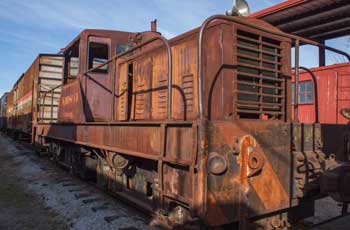
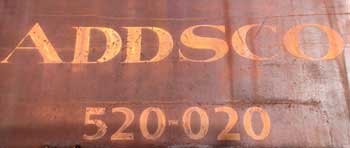
During World War II, Alabama's shipyards played an important role in building the vessels needed by the United States and its allies. At the Alabama Dry Dock and Shipbuilding Company (ADDSCO) in Mobile, Alabama, a small Plymouth center-cab locomotive helped support that enormous industrial effort.
Known as No. 520-020, the locomotive arrived at the shipyard around 1942 or 1943. While larger locomotives handled trains over the nation's railroads, compact industrial switchers like this Plymouth were used to move railroad cars within factories, shipyards, and other industrial facilities.
Serving Alabama's Wartime Shipbuilding Industry
The Alabama Dry Dock and Shipbuilding Company was an important shipbuilder during World War II. Its Mobile shipyard contributed to the nation's wartime production by constructing ships needed for military and maritime service.
Rail transportation was an essential part of large industrial operations. Shipyards depended on the movement of steel, machinery, equipment, and other materials, and small switching locomotives helped position railroad cars where they were needed.
No. 520-020 was among the locomotives that supported these activities at ADDSCO. Its compact center-cab design was suited to the confined working areas and frequent switching movements associated with industrial railroad operations.
Preserved at the Heart of Dixie Railroad Museum
Following its industrial career, Plymouth No. 520-020 was acquired for preservation through a combination of private donations and funds provided by the Heart of Dixie Railroad Museum.
The locomotive is displayed in the museum's Clark Yard in Calera, Alabama.
Although much of its individual history remains to be documented, No. 520-020 represents an important part of Alabama's industrial and wartime heritage. Its preservation helps tell the story of the smaller locomotives whose everyday work supported the much larger undertaking of building ships during World War II.