For more than two decades, a small diesel locomotive known as the "ten-spot" handled the daily switching duties at Memphis Union Station. Moving passenger cars between trains, storage tracks, and station platforms, it performed the behind-the-scenes work necessary to keep passenger rail service running smoothly.
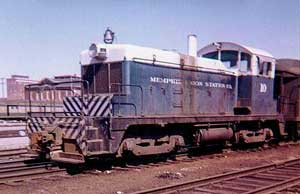
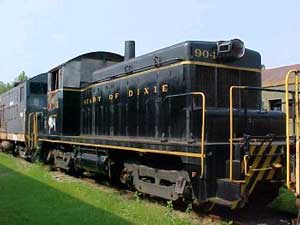
That locomotive was Memphis Union Station No. 10, an Electro-Motive Division (EMD) SW1 built in January 1942. Following the station's closure, it began a second career with Republic Steel in Alabama, where it was renumbered No. 904. After retiring from industrial service, the locomotive eventually joined the Heart of Dixie Railroad Museum.
Its history reflects three distinct chapters of American railroading: the era of busy passenger terminals, the widespread use of diesel switchers in heavy industry, and the preservation of historic railroad equipment.
Built by Electro-Motive Division
EMD constructed the locomotive in January 1942, with final assembly at its LaGrange plant in McCook, Illinois. Originally painted blue and white, it entered service as Memphis Union Station No. 10.
The SW1 was a 600-horsepower diesel-electric switcher, powered by EMD's six-cylinder 567 diesel engine. Its output was approximately 450 kilowatts.
Designed primarily for switching operations, the SW1 was compact enough to work in congested railroad terminals and industrial facilities while providing the low-speed pulling power needed to move passenger and freight cars.
EMD's Second Generation of Switchers
The SW1 represented EMD's second generation of 600-horsepower switching locomotives, succeeding the earlier SW and SC models.
One of its most important improvements was the use of EMD's own 567-series diesel engine, which replaced the power plant used in the earlier models.
According to the museum's original history, EMD produced 661 SW1 locomotives. Production continued through the World War II era and into the early 1950s, despite restrictions imposed on locomotive manufacturing by the War Production Board.
The Ten-Spot at Memphis Union Station
As the station's only dedicated switch engine, No. 10 handled the frequent movements of passenger equipment required by the railroads serving Memphis Union Station.
Passenger trains often needed cars added, removed, or rearranged before departure. Rather than using a road locomotive for these movements, the station relied on the ten-spot to perform the switching.
Its duties included moving spare passenger cars from storage, assembling equipment for outbound trains, and positioning cars where they could be collected by their owning railroads.
Even on the station's final day of operation in 1964, No. 10 remained busy. In addition to its regular assignments, the locomotive moved stored passenger cars to outbound trains or assembled them on ready tracks for collection by their owners.
It was a fitting conclusion to more than two decades of service at the terminal.
A Second Career at Republic Steel
Following the closure of Memphis Union Station in 1964, the locomotive was sold to Republic Steel and renumbered No. 904.
It was assigned to Republic Steel's facility in Thomas, Alabama, where it continued performing switching duties in an industrial environment.
The locomotive remained in service at Thomas until the plant closed in 1984, ending a working career that had begun more than four decades earlier.
Restored to Operation by Heart of Dixie
In 1989, a salvage crew from the Heart of Dixie Railroad Museum began working to return No. 904 to operating condition.
The effort was successful enough that, before reaching the museum, the locomotive temporarily returned to industrial service. American Cast Iron Pipe Company (ACIPCO) used No. 904 for several weeks while its own locomotives were unavailable.
After completing that assignment, No. 904 was moved to the museum's former Powell Avenue location in Birmingham, Alabama.
A Brief Return to Louisville & Nashville Colors
In the fall of 1989, No. 904 received an unusual temporary identity. The museum painted and lettered the locomotive as Louisville & Nashville Railroad No. 11 for photographic sessions held at the Boyles Roundhouse during the L&N Historical Society Convention.
Although No. 904 had never served the L&N under that number, the temporary appearance provided an opportunity to recreate a scene associated with the railroad's history.
The following year, the locomotive was repainted and lettered as No. 904 for the museum's Calera & Shelby Railroad (C&SRR).
Fire Damage and Retirement
No. 904 remained in good operating condition until sometime in the mid-1990s, when a fire broke out in its cab.
The museum's historical account indicates that the fire may have been started by vandals or unauthorized occupants. Whatever the cause, the damage was severe, destroying the locomotive's operating controls.
The fire brought an unfortunate end to the locomotive's operating career at the museum.
A Survivor of Three Railroad Eras
From the passenger platforms of Memphis Union Station to the steel industry of Birmingham and the preservation efforts of the Heart of Dixie Railroad Museum, No. 904 has experienced a remarkably varied career.
Its story illustrates the versatility and durability of early diesel-electric switchers, which often continued working for decades after their original assignments ended.
Although no longer operational, No. 904 remains a connection to the everyday railroad work that helped keep passenger terminals and industrial facilities moving throughout much of the 20th century.