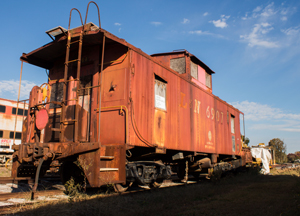
 Louisville & Nashville caboose No. 6907 was built on November 28, 1952, by the International Car Company of Kenton, Ohio, for the Monon Railroad (MON). Delivered in December of that year, it entered service as Monon C-361. C-361 was the second car in an order of nine cabooses, numbered C-360 through C-369, ultimately delivered to the Monon.
Renumbering
The Monon later renumbered the caboose as No. 81502. After the Monon merged with the Louisville & Nashville Railroad, the caboose became L&N No. 907 and was later renumbered No. 6907.
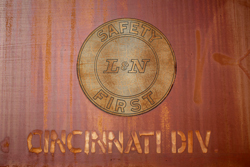 In the late 1970s, the L&N renumbered the caboose once again, this time as No. 154, and assigned it to the Cincinnati Division. On the L&N, the change to a two- or three-digit number signified that the caboose had been downgraded from road service to local and transfer service.
Standardized Design
Having a caboose manufactured by an outside vendor was unusual at the time. Before the 1970s, most railroads manufactured their own cabooses, including the Monon Railroad. As more railroads turned to standardized designs, however, the International Car Company grew to become a major caboose manufacturer. The museum's No. 6907 is a good example of this transition toward standardized caboose construction.
The Monon Railroad
 The Monon Railroad operated almost exclusively within the state of Indiana. In 1971, the Monon merged with the Louisville & Nashville Railroad. Today, CSX operations encompass lines previously operated by the Monon.
The Heart of Dixie
After the L&N retired the caboose from service, it was donated to the Heart of Dixie Railroad Museum on February 14, 1984. Following its arrival at the museum, it was stored at the Woodyard spur.