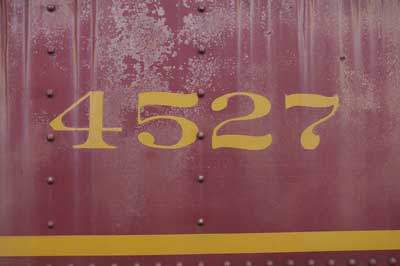
 The Pullman Company built the car that became No. 4527 in 1915. It began life as a 10-section, one-drawing-room, two-compartment sleeping car named Shrewsbury. The car was built to Plan 2585C as part of Lot 4351, a lot consisting of 20 cars.
Return to Pullman
In 1951, after 36 years of service, Shrewsbury returned to the Pullman shops. There, the car was rebuilt as a 13-section Tourist Car under Plans 2585 and 3585. Following the rebuild, it carried No. 5139.
Southern Railway
No. 5139 was one of hundreds of Pullman cars sold to their owning railroads following the United States v. Pullman Co. antitrust case, which ran from 1940 to 1947. No. 5139 was sold to Southern Railway in 1948.
Hayne Car Shop
After September 1953, Southern Railway sent the car to Hayne Car Shop in Spartanburg, South Carolina. There it underwent another conversion, changing from a Tourist Car into a Mail-Express car and receiving the road number No. 4527.
After 1967, when the Post Office Department stopped operating RPO cars, No. 4527 was converted again, this time into a straight baggage car.
Concrete Floor Removed
During one of the car's conversions, Southern Railway removed the standard concrete floor characteristic of heavyweight passenger cars of this era and replaced it with a wood floor. The museum's existing history notes that this was presumably done to reduce the car's weight and allow it to carry more freight and baggage.
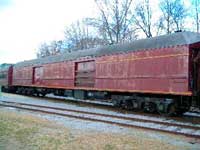 No corresponding changes were made to the trucks or suspension to compensate for the reduction in weight. As a result, No. 4527 rides higher than other cars to which it is coupled—an unusual visible reminder of the modifications made during its working life.
A Commissary Car
No. 4527 was donated to the Heart of Dixie Railroad Club in the late 1960s. The car was refurbished as a commissary car and served the museum for many years on steam excursions and other special-event trains.