For generations, the railroad depot was one of the most important buildings in an Alabama community. It was where passengers began and ended journeys, where freight arrived and departed, and where towns maintained a direct connection with the larger world.
Many of Alabama's depots disappeared as passenger service declined and railroad operations changed. Others survived through preservation and adaptive reuse. Today, these historic stations serve as museums, businesses, and community landmarks while preserving the stories of the railroads and people they once served.
Auburn Train Depot
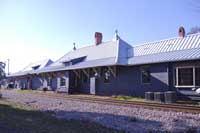 Auburn's historic railroad depot is a surviving reminder of the railroad's role in the development of the community. Located on Mitcham Avenue, the brick building retains architectural details from its railroad past and stands as a tangible connection to Auburn's transportation history.
A plaque at the depot also recalls Jefferson Davis' 1861 review of the Auburn Guard while traveling to Montgomery for his inauguration as president of the Confederate States of America.
Huntsville Depot
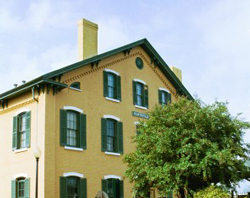 Listed on the National Register of Historic Places, the Huntsville Depot served both as a passenger station and as offices for the eastern division of the Memphis & Charleston Railroad. Passenger service continued at the depot until 1968.
The surviving building remains an important landmark in Huntsville's transportation history and reflects the role railroads played in the city's growth.
Fort Payne Depot Museum
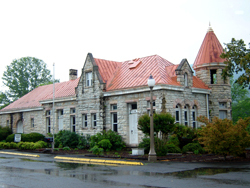 The historic Fort Payne depot has been preserved as a museum interpreting the history of Fort Payne and DeKalb County. Its collections reach beyond railroading to include local history, Native American artifacts, and other materials that help place the railroad within the broader story of the community.
Stevenson Railroad Depot Museum
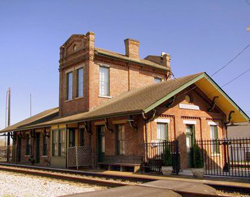 The Stevenson Railroad Depot Museum stands in downtown Stevenson between two historic railroad routes. Built in 1872, the depot occupies the site of an earlier station constructed around 1852 for use by the Nashville & Chattanooga and Memphis & Charleston railroads.
Today, the preserved depot interprets railroad history alongside exhibits exploring other parts of the area's past, including Native American culture, pioneer life, and the Civil War.
Tuscumbia Railway Museum
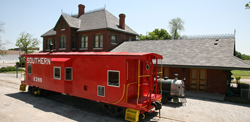 Tuscumbia holds a special place in Alabama railroad history. The Tuscumbia Railway, chartered in 1830, became the state's first railroad and was among the earliest railroads built west of the Allegheny Mountains.
The city's railroad heritage is preserved through its historic depot and museum, connecting visitors with the beginnings of rail transportation in Alabama and the important role railroads played in the Tennessee Valley.